
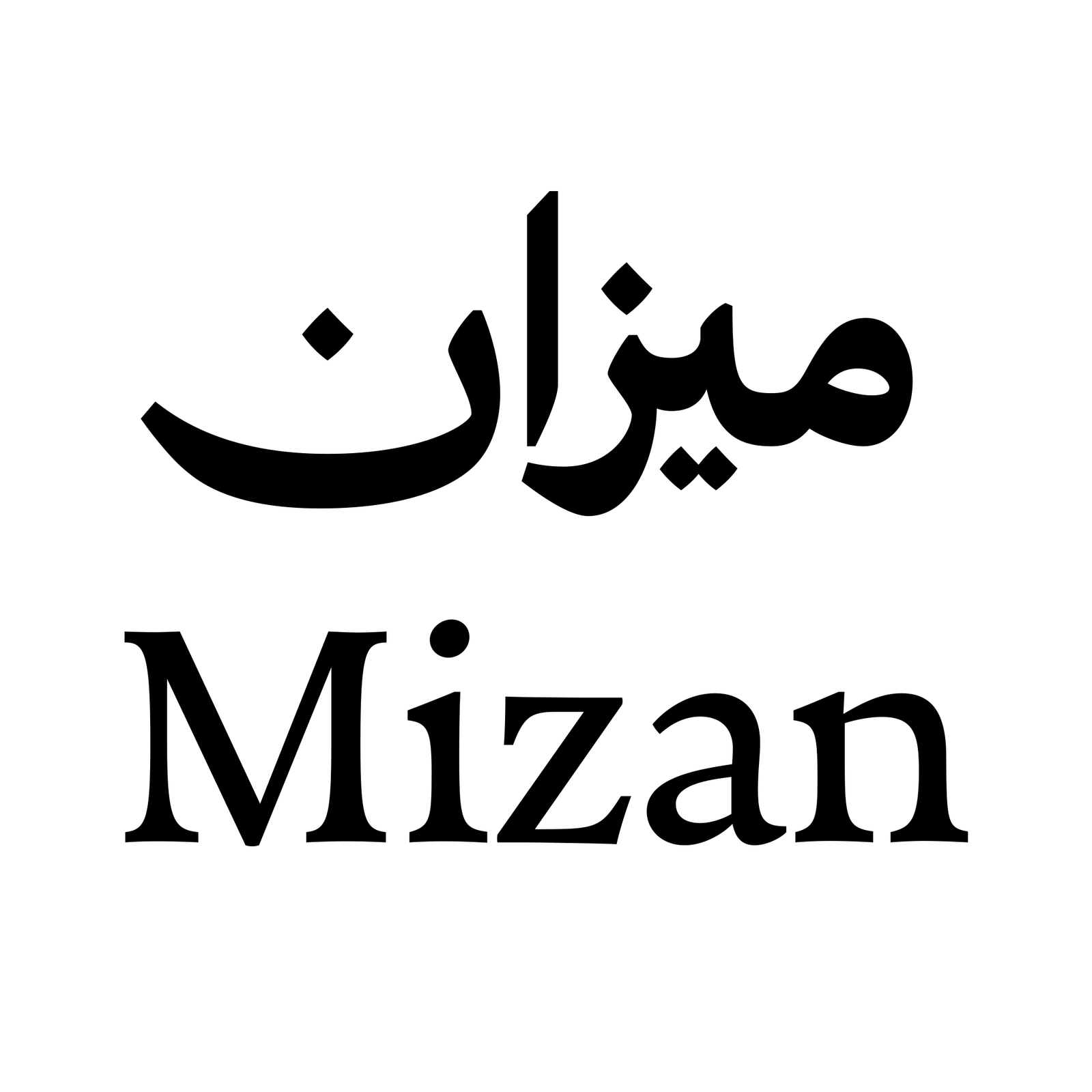
Mizan Arabic Typeface
Mizan is the Arabic word for balance, and in its name lies the core of the concept. This typeface is meant as a balance of traditions and modernity, familiarity and novelty, seamlessness and strong personality, modesty and elegance.
Mizan Arabic and English Font | OTF & PNG | 1.85 MB
Download Mizan, a thoughtfully designed bilingual font featuring harmoniously balanced Arabic and English scripts with refined, professional character for sophisticated design projects across all media (1.85 MB). OTF format with PNG previews.
Mizan—meaning “balance” or “scale” in Arabic—is a typeface that embodies perfect equilibrium in its design. With carefully calibrated proportions and harmonious integration between scripts, this font offers designers a versatile tool for creating projects where Arabic and English coexist with natural grace.
Font Features:
Design Characteristics:
- Perfectly balanced Arabic and English letterforms
- Harmonious proportions with visual equilibrium
- Refined, professional design language
- Excellent readability at all sizes
- Versatile character suitable for any application
Arabic Script:
- Complete Arabic character set
- Full support for diacritics and marks
- Proper character connections and positioning
- Balanced, elegant styling across all letters
- Optimized for both text and display sizes
English/Latin Script:
- Coordinated design matching Arabic style
- Complete uppercase and lowercase characters
- Numerals, punctuation, and special characters
- Harmonious weight and proportion with Arabic
- Professional, refined appearance
Perfect Applications:
- Bilingual Branding: Cohesive identities with natural balance
- Corporate Communications: Professional materials
- Editorial Design: Magazines, books, publications
- Web Design: Elegant digital typography
- Packaging: Sophisticated product presentation
- Signage: Clear, balanced displays
- Social Media: Refined bilingual content
- Print Materials: Brochures, flyers, reports
- Advertising: Campaigns with professional polish
Key Benefits:
- Perfect Balance: Harmoniously proportioned scripts
- Coordinated Design: Seamless Arabic-English integration
- Professional Quality: High-caliber font for commercial use
- Time-Saving: One font for both languages—no mixing required
- Versatile Application: Works across all media
Available in OTF format for seamless integration across all major design platforms—Adobe Creative Suite, Canva, Affinity Designer, and more. The included PNG previews showcase the font’s balanced character. At 1.85 MB, Mizan is lightweight and easy to install.
Key Features of Mizan Font:
- Balanced, harmonious Arabic and English designs
- Complete character sets for both scripts
- Refined, professional aesthetic
- OTF format for universal compatibility
- Includes PNG previews
- 1.85 MB package
- Perfect for projects requiring perfect equilibrium
Perfect For:
- Brand and identity designers
- Corporate communications professionals
- Editorial and publication designers
- Web and digital designers
- Anyone needing balanced, professional bilingual typography
Instantly download Mizan and bring perfect balance to your Arabic and English design projects—where every letter finds its equilibrium and every word flows with natural grace.
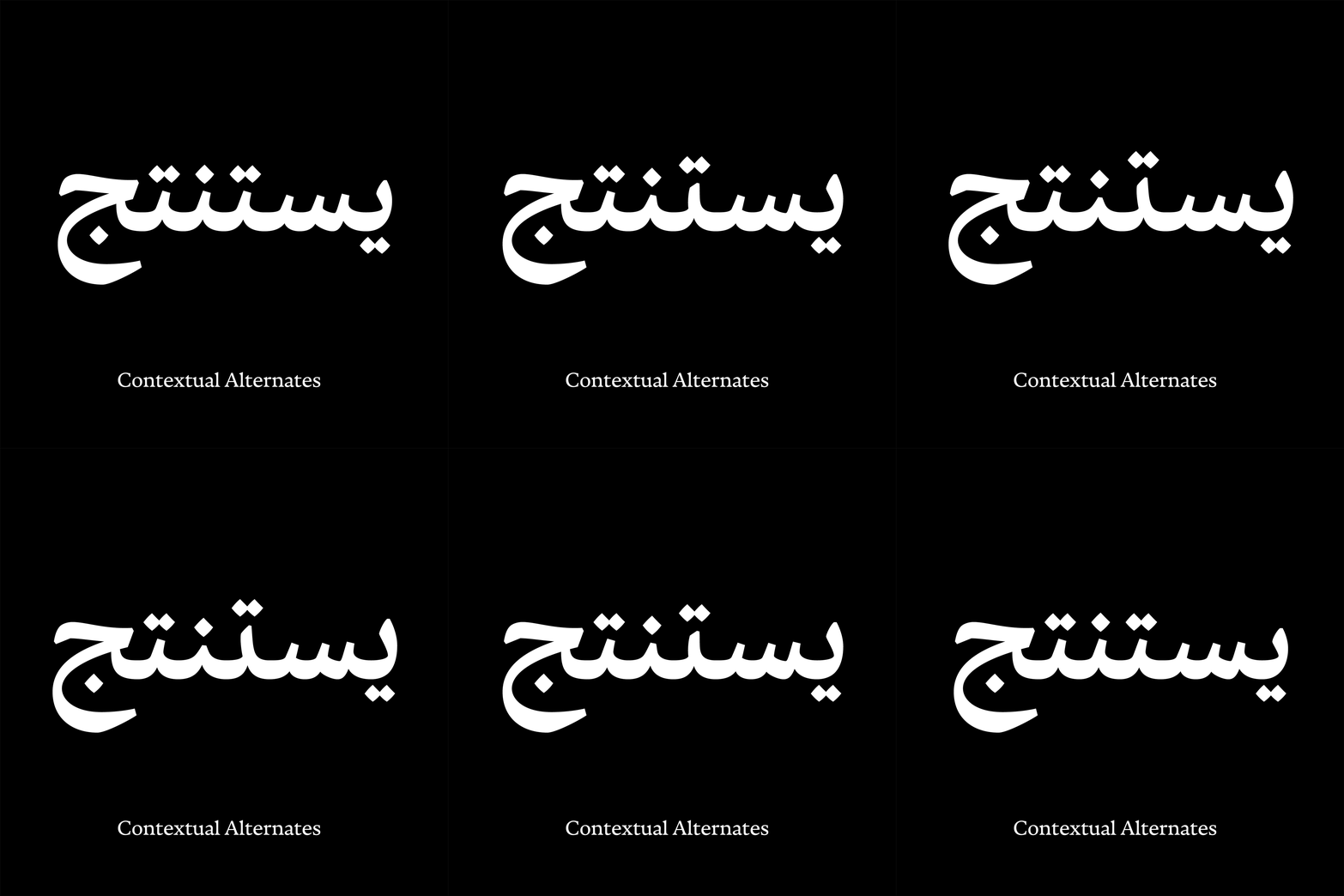
 It takes its main cues from the Naskh writing style while sporting a contemporary character and texture. Its moderate stroke modulation, comfortable proportions, clear and disambiguated forms by means of its extensive sets of ligatures and alternate forms make Mizan ideal for an ultra smooth uninterrupted reading experience for long texts. Its fluid nature, soft stroke connections, open and rounded counterforms make Mizan’s texture soothing and friendly.

Weights & Multi-script support
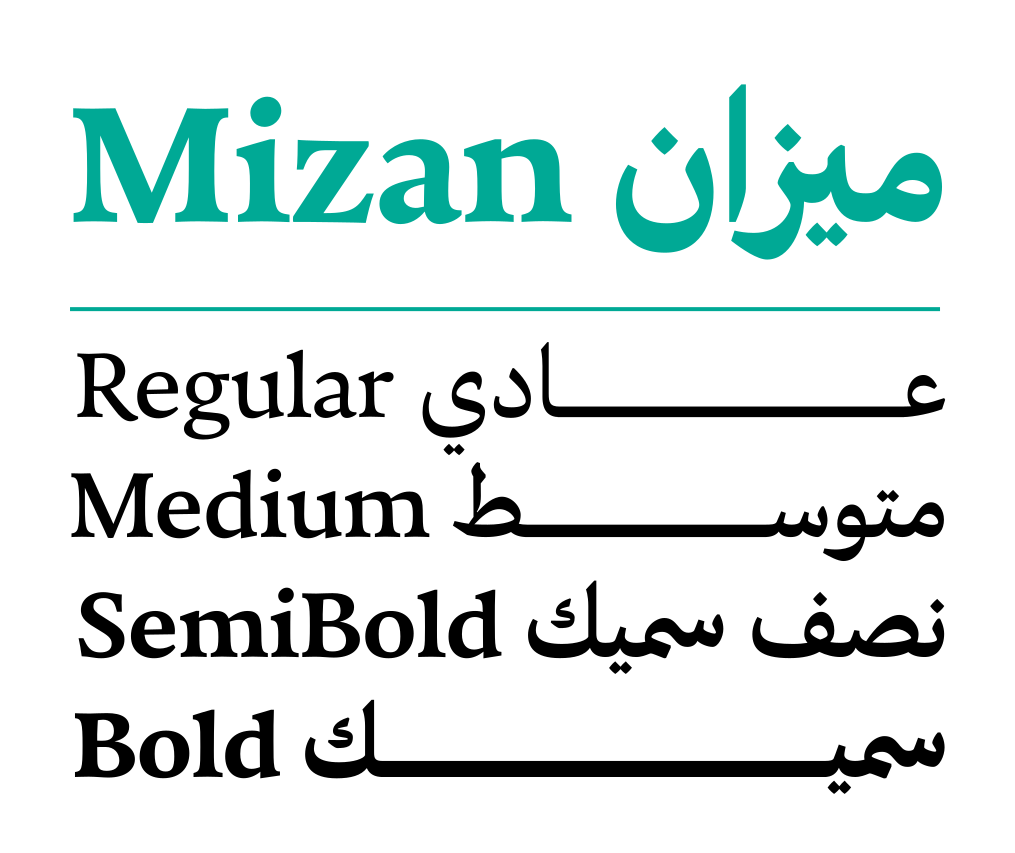
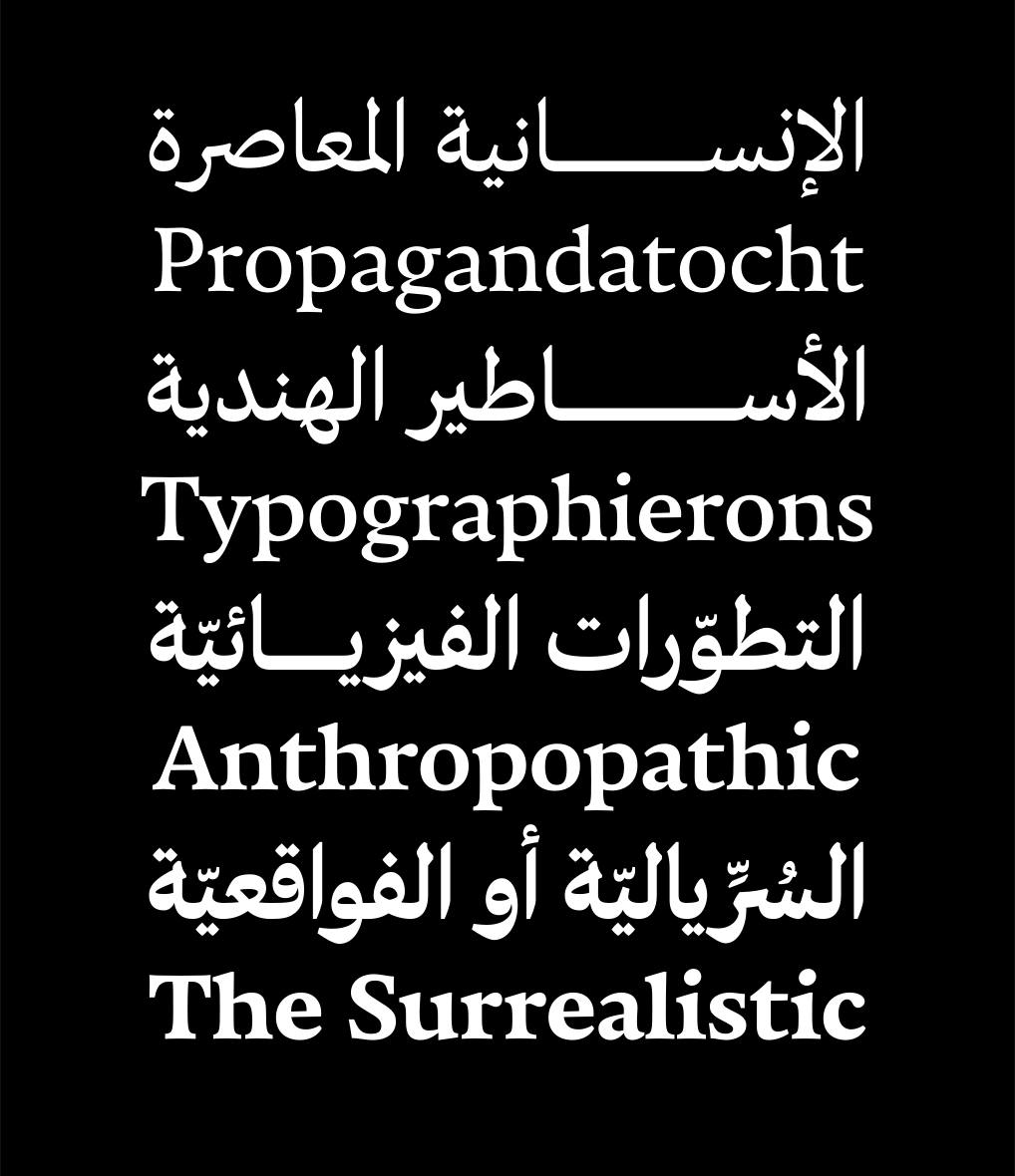
Mizan comes in four weights: Regular, Medium, SemiBold and Bold. For multi-script contexts, Mizan is paired with a customized version of Nocturno from Typotheque.
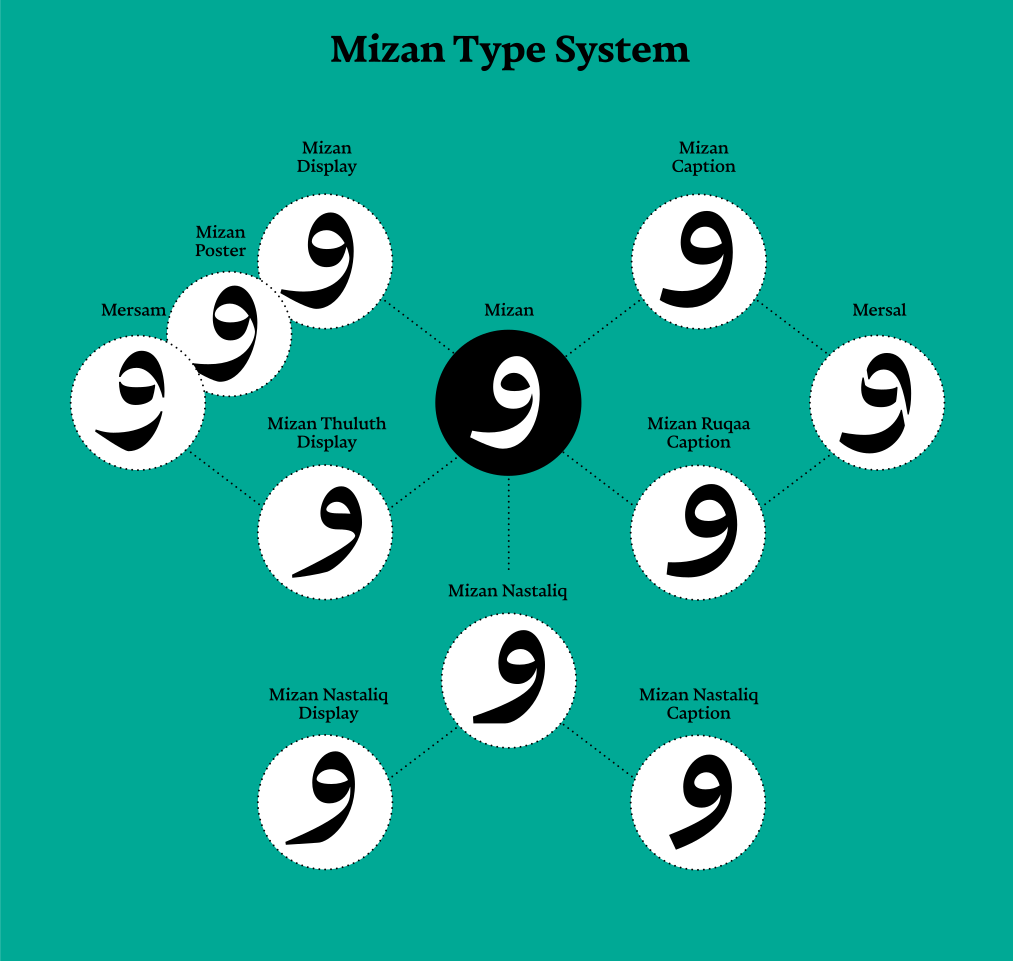
Mizan & Co Type System
Mizan is the first and central family of a large type system that will follow, one family at a time. The Mizan & Co type system studies different methods of creating information hierarchy. On one hand it looks at how, in the history of the Arabic script, as far back as the 10th century, hierarchy was achieved by creating substantially different sets of letters (calligraphic styles) for large versus small sizes or for emphasis. On the other, it explores the method used in printed letters where different cuts of the same set were created for different purposes.
Reviews
There are no reviews yet.